EBOO Therapy in Manhattan: Advanced Blood Purification Treatment Benefits and Booking
Extracorporeal Blood Oxygenation and Ozonation (EBOO) is an advanced blood purification approach that combines controlled oxygenation with medical-grade ozonation to modify circulating blood chemistry and support systemic detoxification. This article explains how EBOO works, the biological mechanisms that drive toxin neutralization and improved oxygen delivery, and the clinical and wellness outcomes users commonly pursue such as enhanced energy, immune modulation, and recovery. Many Manhattan residents search for “eboo therapy nyc” and want clear comparisons to conventional ozone or IV therapies; this guide maps mechanisms, evidence-based benefits, candidate profiles, safety considerations, and practical booking steps in New York City. Readers will learn stepwise treatment mechanics, measurable benefit domains, who is likely to benefit, what to expect during a session, how EBOO differs from alternative blood purification options, and how to schedule care at Forbidden Well. Throughout the piece we use clinical language accessible to non-specialists and target practical decision factors for people exploring longevity, performance, or chronic-inflammation strategies in Manhattan and broader NYC.
What is EBOO Therapy and How Does It Purify Blood?
EBOO therapy is a medical procedure in which blood is temporarily routed through an extracorporeal circuit where it is oxygenated and exposed to controlled ozone concentrations before being returned to the body, producing systemic biochemical changes that aid detoxification and cellular oxygen delivery. The mechanism relies on circulating blood contact time with oxygen/ozone, moderated oxidative signaling that can neutralize certain circulating toxins, and subsequent systemic responses such as improved redox balance and vascular modulation. Clinically, EBOO functions as a blood purification modality and sits within the broader category of blood purification treatments and medical ozone therapies. Understanding these core steps clarifies why EBOO demonstrates different outcomes compared with single-pass ozone or standard IV detox approaches and sets the stage for patient selection and safety considerations.
How Does Extracorporeal Blood Oxygenation and Ozonation Work?
EBOO begins with sterile venous access and an extracorporeal circuit that safely moves blood through an oxygenator and an ozone-exposure chamber under continuous monitoring, then returns treated blood to the patient. Medical-grade ozone is dosed precisely and mixed with oxygen in controlled concentrations to trigger oxidative signaling pathways that can inactivate pathogens, modulate inflammatory mediators, and promote improved oxygen unloading in tissues. Real-time clinical monitoring of flow, oxygenation, and patient vitals prevents overexposure and ensures safety while filtration or adsorption components can remove particulates or altered complexes. This ordered process — access, circulation, controlled ozonation, filtration, and return — explains how EBOO acts on systemic markers and supports downstream physiological improvements.
What Makes EBOO Therapy Different from Traditional Ozone and IV Therapies?
EBOO differs from traditional ozone applications and IV therapies by combining extracorporeal exposure with sustained blood contact time and integrated oxygenation that amplify systemic effects beyond what single-pass or topical ozone approaches achieve. Compared with localized ozone or ozone insufflation, EBOO provides broader circulatory distribution and controlled oxidative dosing with clinical monitoring, which increases therapeutic breadth while reducing variability. IV therapies deliver nutrients and antioxidants directly into plasma but have limited capacity for altering circulating toxin chemistry or producing the same oxidative signaling cascade; EBOO is therefore complementary to IV nutrient support rather than a direct replacement. These mechanistic differences inform when clinicians prefer EBOO: for systemic detoxification goals, immune modulation, or mitochondrial support that require more robust blood-based interventions.
What Are the Key Benefits of EBOO Therapy in New York City?

EBOO therapy delivers several clinically relevant benefit domains including detoxification, enhanced cellular oxygenation, immune modulation, improved recovery and circulation, and anti-aging/performance outcomes. Each benefit arises from distinct mechanisms: oxidative neutralization of circulating toxins, improved oxygen delivery to tissues, reduced systemic inflammation through redox signaling, and support for mitochondrial function. For Manhattan-based clients seeking advanced blood detox or longevity treatments, EBOO presents an evidence-informed option that targets systemic biology rather than only symptomatic relief. The following bullet list summarizes the primary benefit areas and their immediate value for patients considering EBOO treatment.
EBOO offers five principal benefits:
- Detoxification: Controlled ozonation neutralizes certain circulating oxidative by-products and can facilitate mobilization of bound toxins.
- Cellular Oxygenation: Oxygenation steps improve tissue oxygen delivery and support mitochondrial ATP production.
- Immune Modulation: Redox signaling can down-regulate chronic inflammatory mediators and promote balanced immune responses.
- Recovery and Circulation: Improved blood rheology and endothelial signaling support faster post-exertion recovery and clearer cognition.
- Anti-Aging and Performance: Repeated protocols aim to reduce inflammation, support cellular repair, and enhance stamina for high-demand lifestyles.
EAV summary: The table below condenses these benefits into Mechanism and Expected Outcome columns to make choices practical for prospective patients.
| Benefit Domain | Mechanism | Expected Outcome |
|---|---|---|
| Detoxification | Controlled ozonation and oxidative signaling | Reduced circulating oxidative by-products and improved biochemical markers |
| Oxygenation | Extracorporeal oxygenator increases oxygen content and delivery | Improved energy, endurance, and mitochondrial support |
| Immune Modulation | Redox-mediated cytokine regulation | Lower systemic inflammation and clearer immune balance |
| Circulation & Recovery | Improved blood rheology and endothelial response | Faster physical recovery and improved cognitive clarity |
| Anti-Aging/Performance | Combined detox + oxygenation + signaling | Enhanced tissue repair and sustained performance gains |
After reviewing the clinical benefits, clients seeking a tailored, luxury experience in Manhattan can access personalized EBOO treatment plans through Forbidden Well. Forbidden Well integrates EBOO with complementary services such as IV therapy and hormone optimization, facilitating continuity of care. For residents and visitors interested in booking, Forbidden Well operates as a medical and wellness lounge in Manhattan that offers personalized clinical oversight and direct booking for advanced protocols.
How Does EBOO Support Detoxification and Toxin Removal?
EBOO supports detoxification by exposing circulating blood to controlled ozone concentrations that chemically modify certain toxic molecules and trigger physiological pathways for their clearance, producing changes in redox balance that encourage hepatic and renal processing. The treatment can target environmental pollutants and oxidative metabolites by disrupting harmful molecular structures and promoting their binding to carriers that are more easily metabolized or excreted. Evidence from studies of medical ozone and extracorporeal oxygenation suggests timeframes for measurable biochemical change commonly range from weeks to months, depending on baseline toxin load and protocol frequency. Patients should expect gradual improvements in subjective symptom relief over a course of repeated sessions rather than immediate one-time elimination.
In What Ways Does EBOO Enhance Cellular Oxygenation and Energy?
EBOO enhances cellular oxygenation through an extracorporeal oxygenation step that increases arterial oxygen content and optimizes oxygen delivery dynamics, thereby supporting mitochondrial ATP generation and improving cellular respiration efficiency. Improved oxygen availability reduces anaerobic stress and can accelerate recovery after exertion while increasing baseline energy and cognitive clarity for daily activities. Objective markers such as lactate clearance and perceived exertion often improve following a structured series of treatments, with athletes and high-performance professionals noting shorter recovery times. These physiological changes underpin why EBOO is positioned as a mitochondrial support therapy and a component of longevity and performance regimens in Manhattan wellness programs.
Who Can Benefit from EBOO Therapy in Manhattan?
EBOO is most appropriate for individuals seeking systemic blood purification and physiologic optimization, including affluent, health-focused Manhattan residents pursuing longevity, biohacking patients aiming for performance gains, and people with chronic inflammatory symptoms seeking adjunctive systemic care. The procedure is also considered by those with persistent fatigue, long-haul post-infectious syndromes, or patients who have not achieved desired results from localized ozone or IV therapies alone. Candidate selection balances clinical history and wellness goals to determine whether EBOO’s extracorporeal approach aligns with the patient’s desired outcomes. Understanding typical candidate profiles helps prospective patients decide whether to pursue a consultation for EBOO in NYC.
The following list identifies common candidate profiles who may benefit from EBOO:
- Individuals with chronic inflammatory conditions seeking systemic modulation.
- Busy professionals and athletes needing accelerated recovery and mitochondrial support.
- People pursuing anti-aging strategies who want cellular detox and improved oxygenation.
These profiles clarify who typically considers EBOO and lead into the next practical topic: mapping specific conditions and expected outcomes for each profile.
Which Conditions and Wellness Goals Does EBOO Address?
EBOO addresses a range of conditions and goals related to systemic inflammation, chronic fatigue, cognitive fog, and performance recovery by improving oxygen delivery, modulating immune responses, and aiding detoxification pathways. For chronic inflammatory conditions, EBOO’s redox signaling can reduce pro-inflammatory cytokines and support symptom reduction when used as part of comprehensive care. For fatigue and cognitive complaints, improved mitochondrial efficiency and oxygenation often correlate with measurable improvements in energy and mental clarity. For longevity and anti-aging goals, repeated protocols aim to maintain lower inflammatory baselines and support tissue repair, although outcomes depend on integrative lifestyle and adjunctive therapies.
Why Is EBOO Ideal for Anti-Aging and Performance Enhancement?
EBOO is well-suited for anti-aging and performance because it targets core biological levers—oxidative balance, oxygen delivery, and immune regulation—that influence cellular senescence and recovery capacity. By lowering chronic inflammatory signals and supporting mitochondrial function, EBOO can help reduce biological stressors associated with accelerated aging and improve metrics related to endurance and recuperation. Athletes and high-demand professionals often use EBOO in cyclical protocols to sustain performance periods while also integrating nutritional and hormonal optimization for best results. When combined with ongoing monitoring and adjunctive therapies, EBOO contributes to a long-term strategy for maintaining physiological resilience.
What to Expect During Your EBOO Therapy Experience at Forbidden Well
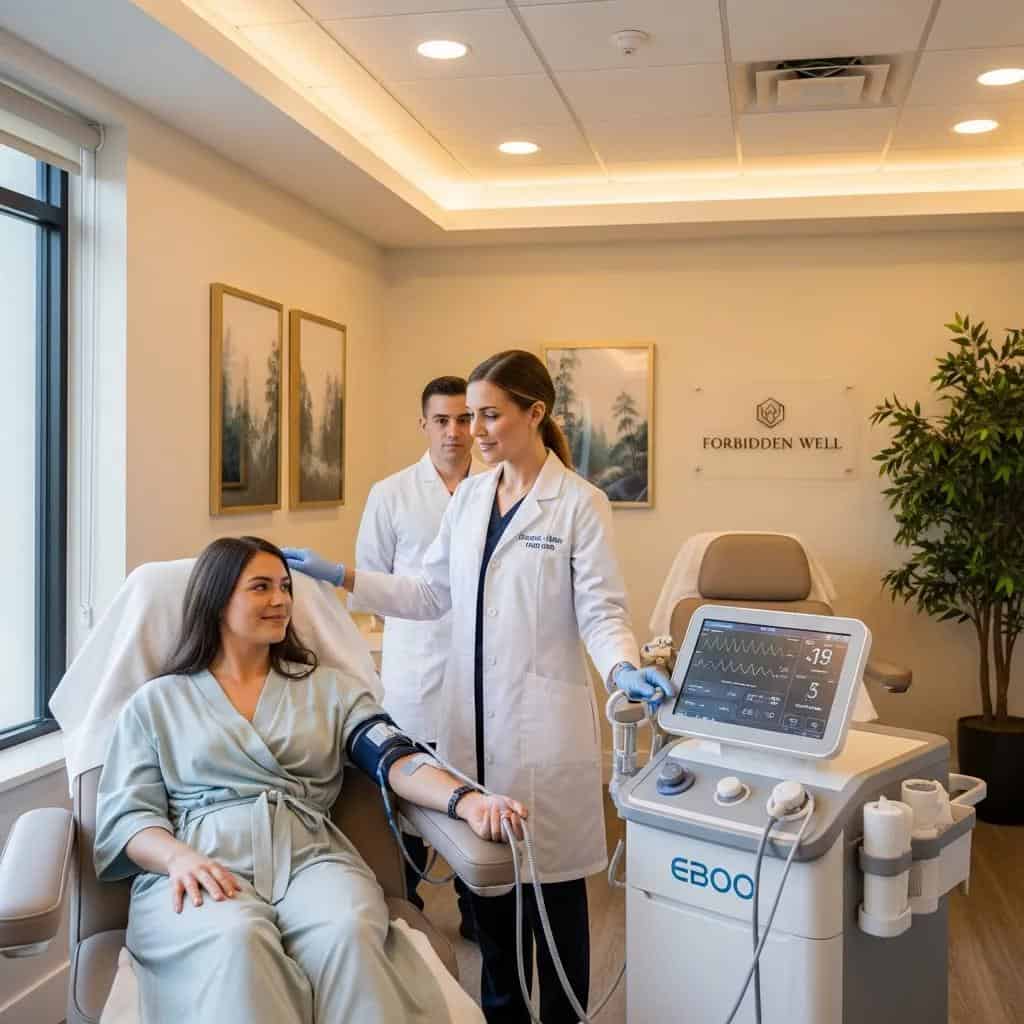
During a typical EBOO pathway, patients undergo an initial consultation, followed by an individualized protocol design, in-clinic treatment sessions with continuous monitoring, and aftercare guidance to track outcomes and adjust frequency. The clinical workflow emphasizes safety: venous access, extracorporeal circuit management, precise ozone dosing, and post-session monitoring ensure a controlled therapeutic exposure. Comfort measures and a luxury lounge environment support patient experience for Manhattan clientele, while clinical oversight manages contraindications and coordinates adjunctive IV or hormone therapies as needed. Understanding these steps helps set expectations for session duration, sensations during treatment, and short-term recovery considerations.
The patient journey at Forbidden Well is organized into distinct steps to make the process clear and reliable.
- Consultation: Review history and goals to design a protocol.
- Personalized Treatment Plan: Clinician prescribes ozone dosing and session frequency.
- Session & Monitoring: On-site administration with continuous vital and circuit checks.
- Aftercare & Follow-up: Post-session guidance, outcomes tracking, and scheduling.
These steps demonstrate how clinical and comfort elements combine to deliver a high-quality EBOO experience and lead naturally into a concise session logistics table that clarifies duration and oversight.
| Step | Duration | Clinical Oversight |
|---|---|---|
| Consultation | 30–60 minutes | Clinician review and interpretation |
| EBOO Session | 90–180 minutes | Continuous monitoring of flow, oxygenation, ozone dose |
| Immediate Recovery | 15–30 minutes | Vital checks and symptom assessment |
| Follow-up | 15–30 minutes | Outcome review and scheduling |
How Is the Personalized EBOO Treatment Protocol Designed?
Personalized EBOO protocols begin with a medical intake and a clear statement of therapeutic goals such as detoxification, energy optimization, or inflammation reduction. Clinicians translate these inputs into ozone dosing parameters, oxygenation settings, session length, and recommended frequency, adjusting for individual tolerance and co-therapies. Example protocol features include incremental ozone titration across sessions and integration of IV nutrient support or hormone optimization when appropriate. Regular monitoring informs protocol adjustments to optimize outcomes over a series of treatments.
What Are the Safety Measures and Possible Side Effects?
Safety measures for EBOO include use of medical-grade ozone generators, precise dosing protocols, sterile extracorporeal circuits, continuous vital monitoring, and protocols to abort or adjust treatment if adverse signs appear, which together minimize risk. Common transient side effects reported after ozone therapies can include mild fatigue, transient headache, or lightheadedness, typically resolving within 24–48 hours; clinicians monitor incidence and tailor protocols accordingly. Contraindications and relative precautions are assessed during consultation, and patients are advised about pre- and post-session behaviors that support safety and efficacy. These precautions emphasize the importance of professional oversight and gradual protocol progression.
How Does EBOO Therapy Compare to Other Blood Purification Treatments?
EBOO contrasts with single-pass ozone therapies and IV detox approaches by providing longer blood contact time with ozone and integrated oxygenation that can produce broader systemic biochemical effects and more robust redox signaling. While traditional ozone applications and ozone insufflation focus on localized or shorter-duration exposures, EBOO’s extracorporeal design enables more controlled systemic modulation with clinical monitoring. IV therapies supply nutrients and antioxidants to support detox and recovery but do not typically alter the chemical composition of circulating toxins in the same way EBOO can; thus, EBOO and IV/hormone therapies are often complementary within an integrated care plan. The table below compares therapies on mechanism, session length, risks, and typical uses to help decision-makers choose the most appropriate approach.
| Therapy | Mechanism | Session Length | Typical Uses |
|---|---|---|---|
| EBOO | Extracorporeal oxygenation + controlled ozonation | 90–180 minutes | Systemic detox, immune modulation, mitochondrial support |
| Traditional Ozone | Topical or single-pass ozone exposure | 30–60 minutes | Localized ozone effects, adjunctive care |
| IV Therapy | Intravenous nutrient and antioxidant delivery | 30–90 minutes | Nutrient repletion, acute recovery, symptomatic support |
After considering comparative mechanisms and outcomes, advanced providers in Manhattan may offer integrated plans that pair EBOO with IV nutrient regimens or hormone optimization for layered benefits. Forbidden Well positions such integrated approaches as part of its service menu, coordinating EBOO with complementary IV and hormonal services for patients who require multi-modal intervention; interested patients can discuss sequencing and combined protocols during a consultation.
What Are the Differences Between EBOO and Traditional Ozone Therapy?
EBOO is an extracorporeal approach that provides extended blood contact time under clinical monitoring, whereas traditional ozone therapy often uses single-pass techniques or localized applications with shorter exposure and limited systemic distribution. The clinical implications include potentially greater systemic oxidative signaling and detox capacity with EBOO, balanced against longer session duration and more intensive monitoring needs. Safety protocols differ as well: EBOO requires extracorporeal circuit sterility and continuous flow monitoring, while some traditional ozone methods have simpler setups but less systemic reach. These procedural and monitoring distinctions inform clinical choices based on patient goals and tolerance.
How Does EBOO Complement Advanced IV and Hormone Therapies?
EBOO complements IV and hormone therapies by preparing a circulatory and systemic environment that can better utilize nutritional inputs and hormonal adjustments, with detoxification and improved oxygenation enhancing nutrient uptake and cellular responsiveness. Practically, clinicians sequence EBOO and IV sessions to avoid concurrent oxidative stress and to maximize recovery windows, and they may schedule hormone optimization around observed physiological responses to EBOO. Recurring-care programs often facilitate coordinated scheduling and monitoring for integrated protocols, enabling smoother long-term maintenance of outcomes when multiple modalities are indicated.
How to Book EBOO Therapy at Forbidden Well NYC
Booking EBOO at Forbidden Well begins with a consultation to confirm candidacy and design a personalized protocol, after which sessions are scheduled based on availability and clinical recommendations. Pricing for EBOO sessions and bundled protocols is provided during the consultation and booking flow; prospective patients are encouraged to book a consult to receive a tailored pricing overview. The following step-by-step checklist explains how to initiate the process and what to prepare for your first visit.
- Request a Consultation: Submit intake details and medical history to begin clinical screening.
- Schedule Initial Session: Book your personalized EBOO sessions.
What Are the Pricing and Benefits for EBOO Treatments?
Forbidden Well provides specific pricing information during a consultation and booking process so that each patient receives individualized cost estimates aligned with their prescribed protocol and frequency. Benefits typically emphasize scheduling convenience, access to integrated care pathways, and coordinated follow-up to measure outcomes. Prospective clients should use the consultation to understand how recurring care supports the frequency and sequencing that maximize EBOO benefits.
How Can You Schedule a Consultation and Direct Booking?
To schedule, prospective patients provide an initial intake and describe goals so the clinical team can confirm candidacy; once the consult is complete, direct booking of sessions is arranged through Forbidden Well’s booking process. Prepare for your first consultation by gathering a concise medical history and a list of current medications or supplements to ensure safe protocol design. During the consult you will learn expected session durations, suggested frequency, and how EBOO may be combined with IV or hormone therapies if appropriate. For local patients, Forbidden Well operates from a Manhattan location to deliver clinical oversight and a luxury patient experience in a centralized setting at 52 E 11th St, New York, NY 10003.