EBOO Therapy
Extracorporeal Blood Oxygenation & Ozonation
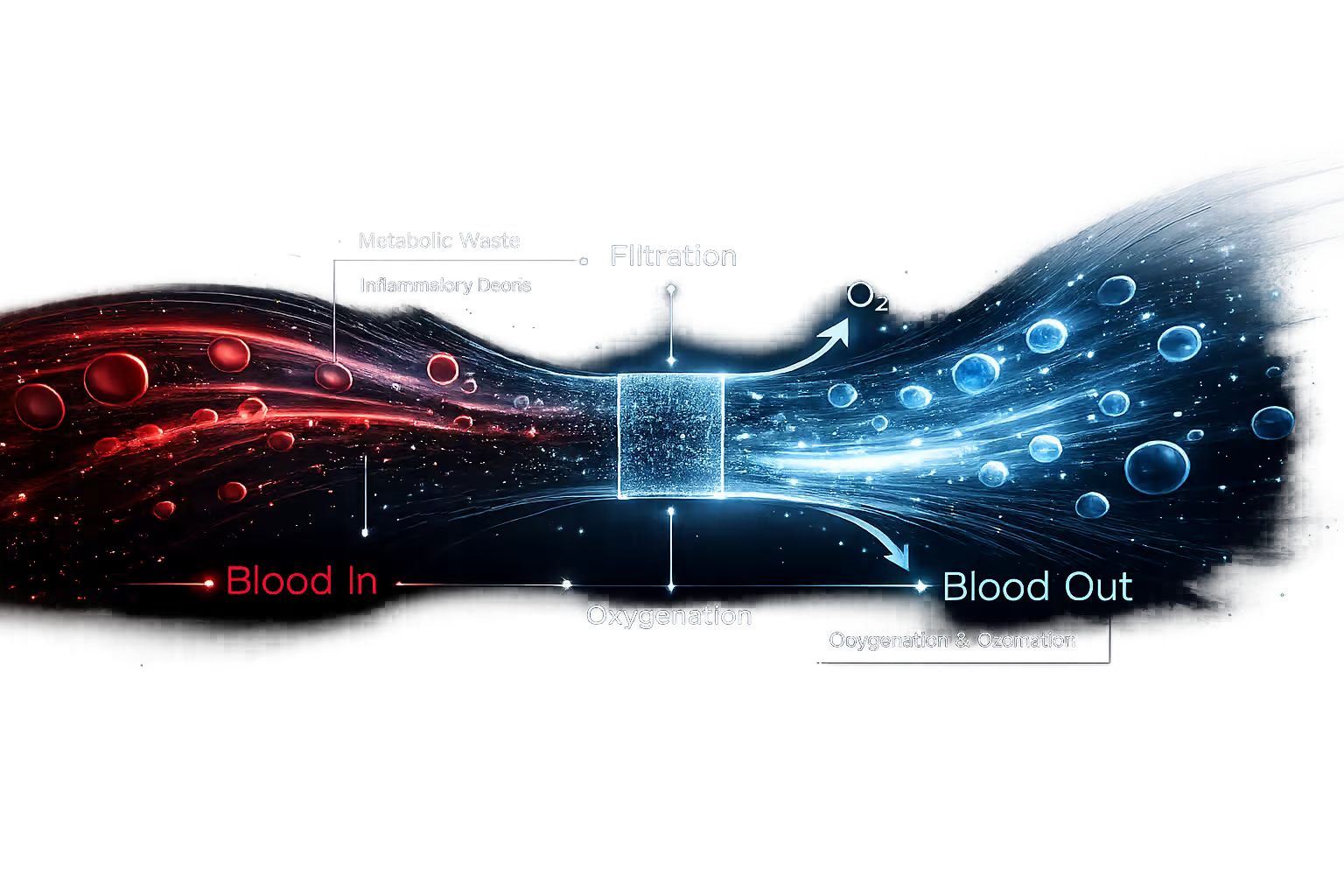
EBOO (Extracorporeal Blood Oxygenation and Ozonation) is a clinical procedure in which a portion of your blood is drawn into a closed external circuit, passed through medical-grade filtration, exposed to controlled oxygen and ozone, and returned to your body in real time. At Forbidden Well in Union Square, NYC, it’s offered as a structured, consultation-based program.
Your blood, processed outside the body.
At Forbidden Well in New York City, EBOO is administered as a structured, consultation-based program for patients pursuing advanced circulatory support and systemic performance optimization. Each session processes approximately two liters of blood under continuous clinical monitoring.
The procedure is designed to support oxygenation, promote metabolic clearance, and help restore oxidative balance at a level that smaller-volume ozone therapies cannot reach.
Most interventions work around the blood. This one works inside it.
EBOO is a clinical procedure. Results vary based on individual physiology, health history, and treatment adherence. EBOO therapy is not a cure or treatment for any disease.
Modern life places a growing burden on the bloodstream.
Environmental exposures enter circulation and can accumulate quietly over time, often before obvious symptoms appear. This can affect circulation, oxygen delivery, and overall physiologic efficiency.
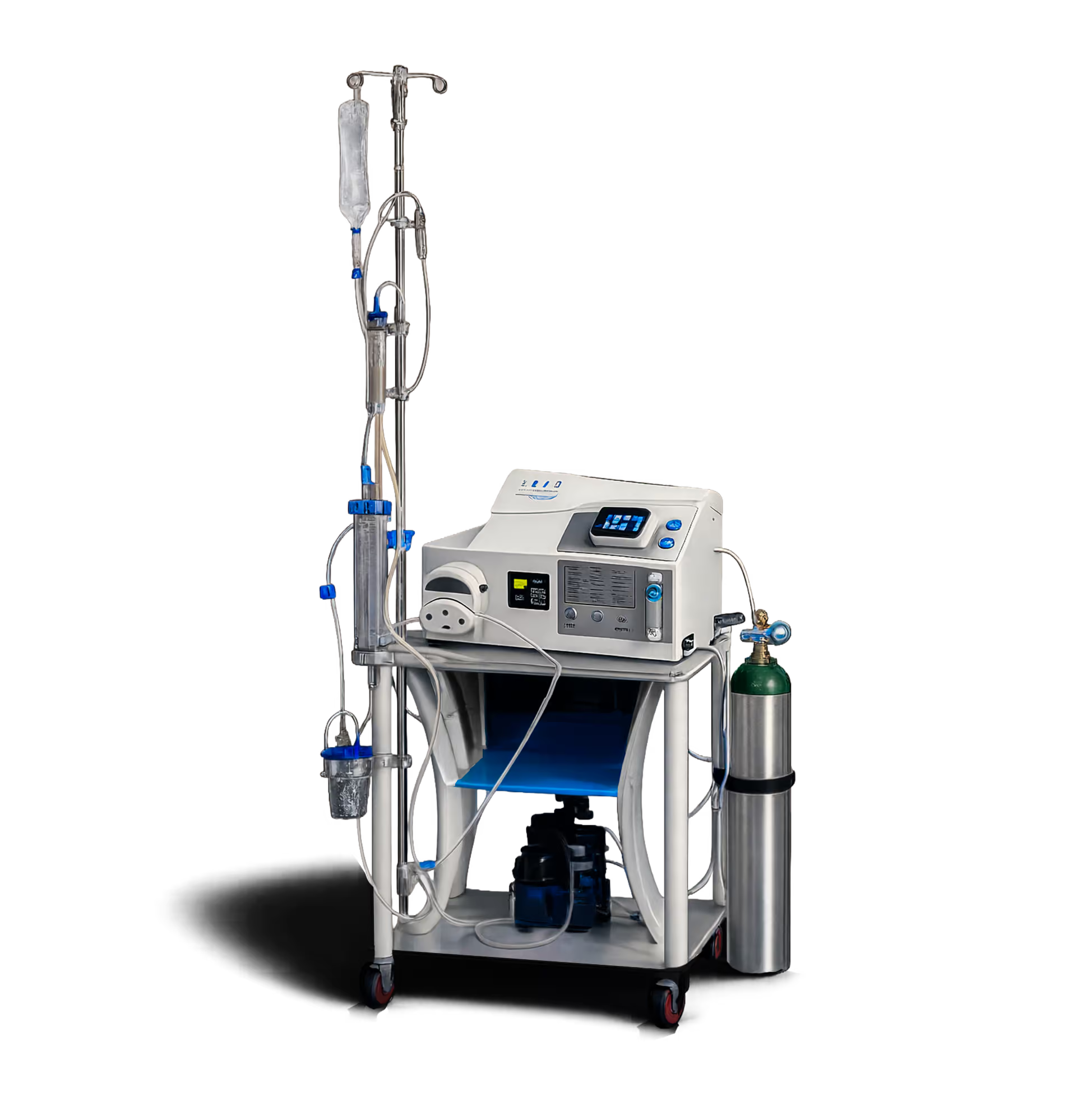
EBOO therapy is designed to support healthier blood circulation and oxygenation. By circulating a portion of the blood through a controlled extracorporeal system, EBOO enables oxygenation, filtration, and precisely calibrated ozonation under continuous clinical monitoring.
At Forbidden Well, every EBOO session is preceded by a clinical consultation, individualized to your history and goals, and monitored throughout by trained staff. This is not a walk-in service. It is a structured clinical protocol designed for patients who want a more advanced level of care.
Consultation-based program. Candidacy determined through clinical review.
Two dynamics. One procedure.
Clearing what the blood has accumulated. Supporting what circulation depends on.
Each session is designed to work on both sides of the equation. The dialyzer reduces circulating byproducts the body benefits from clearing. The ozonated oxygen feed supports the physiologic conditions healthy circulation, oxygen delivery, and recovery rely on — without overriding the body’s own pace.
Remove
- Metabolic waste
- Oxidative byproducts
- Cellular debris
- Lipid-bound compounds
- Inflammatory byproducts
- Immune complexes
Improve
- Blood oxygenation
- Circulation
- Tissue oxygen delivery
- Oxidative balance
- Cellular energy
- Recovery capacity
Two dynamics. One procedure.
Clearing what the blood has accumulated. Supporting what circulation depends on.
Each session is designed to work on both sides of the equation. The dialyzer reduces circulating byproducts the body benefits from clearing. The ozonated oxygen feed supports the physiologic conditions healthy circulation, oxygen delivery, and recovery rely on — without overriding the body’s own pace.
Remove
- Metabolic waste
- Oxidative byproducts
- Cellular debris
- Lipid-bound compounds
- Inflammatory byproducts
- Immune complexes
Improve
- Blood oxygenation
- Circulation
- Tissue oxygen delivery
- Oxidative balance
- Cellular energy
- Recovery capacity
Modern life places a growing burden on the bloodstream.
Environmental exposures enter circulation and can accumulate quietly over time, often before obvious symptoms appear. This can affect circulation, oxygen delivery, and overall physiologic efficiency.
EBOO therapy is designed to support healthier blood circulation and oxygenation. By circulating a portion of the blood through a controlled extracorporeal system, EBOO enables oxygenation, filtration, and precisely calibrated ozonation under continuous clinical monitoring.
At Forbidden Well, every EBOO session is preceded by a clinical consultation, individualized to your history and goals, and monitored throughout by trained staff. This is not a walk-in service. It is a structured clinical protocol designed for patients who want a more advanced level of care.
Schedule an EBOO ConsultationConsultation-based program. Candidacy determined through clinical review.
Extracorporeal circuit — ozonation + oxygenation under continuous monitoring

When the body is doing everything right
- Clean nutrition
- Regular movement
- Adequate sleep
- Proper hydration
- Consistent self-care
And yet performance, recovery, or clarity still feel capped.

When internal efficiency improves
- Oxygen delivery becomes more effective
- Circulatory flow is better utilized
- Cellular energy has more capacity to work with
- Recovery demands are met more easily
- The body has less competing against it
This is the level at which EBOO is designed to support.
The Pinnacle of Blood Based Optimization
EBOO therapy represents the pinnacle of extracorporeal blood oxygenation and ozonation—an elite, precision-engineered intervention available at select clinics worldwide.
During a session, up to two liters of blood are circulated through a closed external medical system outside the body. The blood is enriched with high-purity medical oxygen, exposed to precisely calibrated medical ozone, and filtered before being returned under continuous real-time clinical monitoring.
The process operates at the level of circulation itself. Oxygenation, ozonation, and filtration run simultaneously through a controlled extracorporeal circuit, monitored throughout by clinical staff. This is not stimulation or supplementation. It is a direct, systemic intervention administered under clinical supervision.
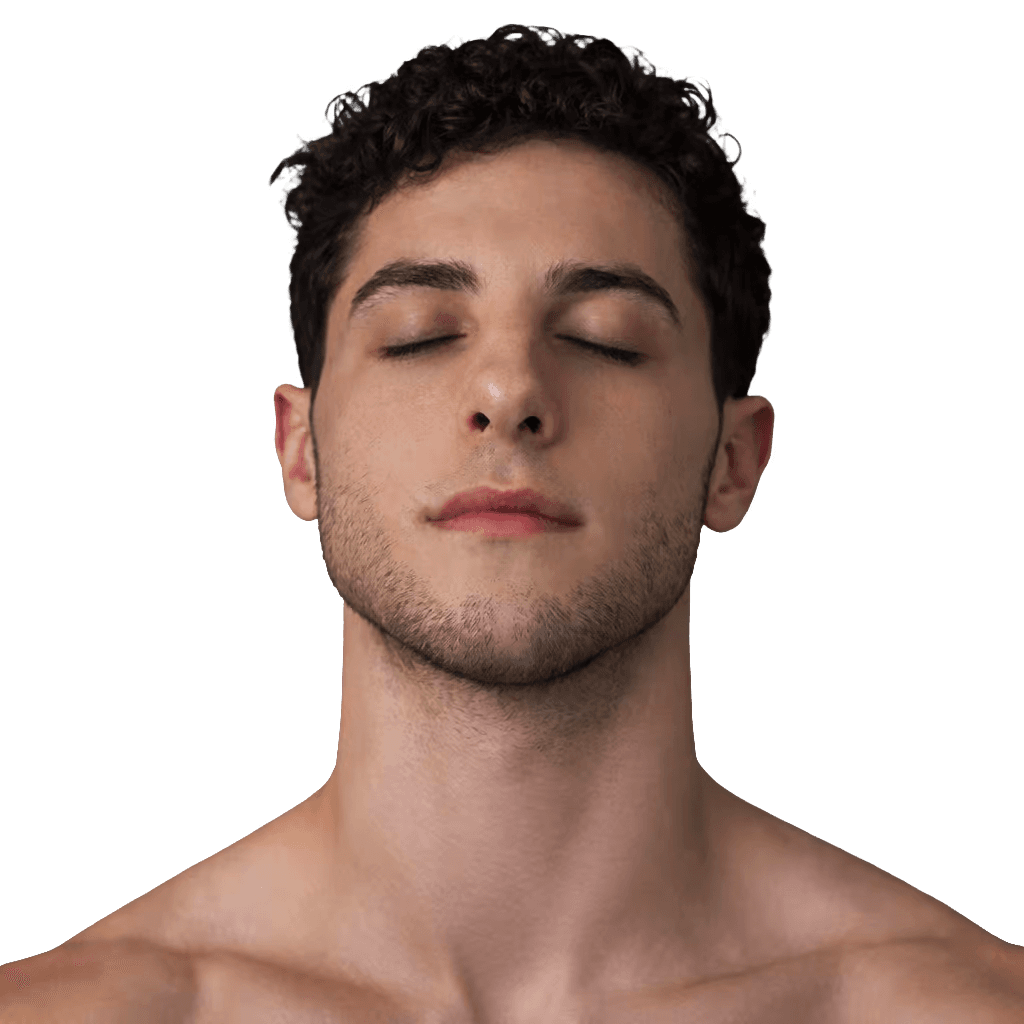
Core Elements of EBOO Therapy in (3)
- 01 Circulatory & Metabolic Assessment
- 02 Extracorporeal Blood Processing
- 03 Progressive Physiologic Support

01 Circulatory & Metabolic Assessment
Before treatment parameters are finalized, clinicians evaluate how efficiently blood is circulating and how the body is managing metabolic load. The goal is not to diagnose disease but to identify physiologic patterns that influence treatment tolerance, dosing strategy, and expected response over time.

02 Extracorporeal Blood Processing
A controlled portion of blood circulates through a closed, medical-grade extracorporeal system for approximately 50 minutes. Up to two liters are sequentially oxygenated, filtered, and exposed to precisely calibrated medical ozone before being returned to circulation in real time under continuous monitoring.
03 Progressive Physiologic Support
EBOO is intended to work cumulatively rather than as a single intervention. Over a structured series, many individuals report improvements in energy consistency, recovery efficiency, mental clarity, and overall physiologic resilience. Appointments are scheduled as two-hour sessions to allow for full preparation, monitoring, and post-treatment observation.
“The blood
does not lie.”
Each EBOO session at Forbidden Well begins with a structured clinical consultation to ensure extracorporeal blood oxygenation and ozonation is appropriate, well tolerated, and aligned with the individual's physiology and wellness objectives. Clinicians review relevant health history, lifestyle factors, stress load, immune considerations, and current therapies, with particular attention to circulation, recovery capacity, and factors that may influence oxidative balance or treatment response.
This evaluation directly informs how the session is designed, including blood flow rate, oxygen concentration, ozone dosing parameters, and treatment duration. Sessions are delivered within a controlled medical framework and monitored continuously in real time, with clinicians tracking circulation dynamics, oxygenation, and patient comfort throughout the procedure. This individualized, measured approach allows EBOO therapy to be integrated responsibly into broader wellness strategies rather than applied as a standardized, one-size-fits-all intervention.
The most advanced blood-based therapy available in New York.
Forbidden Well™
Clinical Protocol → Four-Session Series
Scope
- Initial Clinical Assessment→
- Extracorporeal Processing Phase→
- Progressive Physiologic Support Phase→
- Four-Session Clinical Protocol→
- Candidacy Review and Clinical Intake→
- Ongoing Treatment Planning→
EBOO therapy is designed to work cumulatively rather than as a single intervention. Forbidden Well recommends a minimum four-session protocol, typically performed once weekly. This structure allows circulatory, oxidative, and metabolic adaptations to develop progressively, while enabling clinicians to assess tolerance, observe response patterns, and refine treatment parameters over time.
During the initial evaluation and throughout the program, practitioners may determine that EBOO therapy is best supported by complementary elements such as targeted infusion therapy or orthomolecular supplementation. These components are introduced selectively based on individual physiology and clinical response.
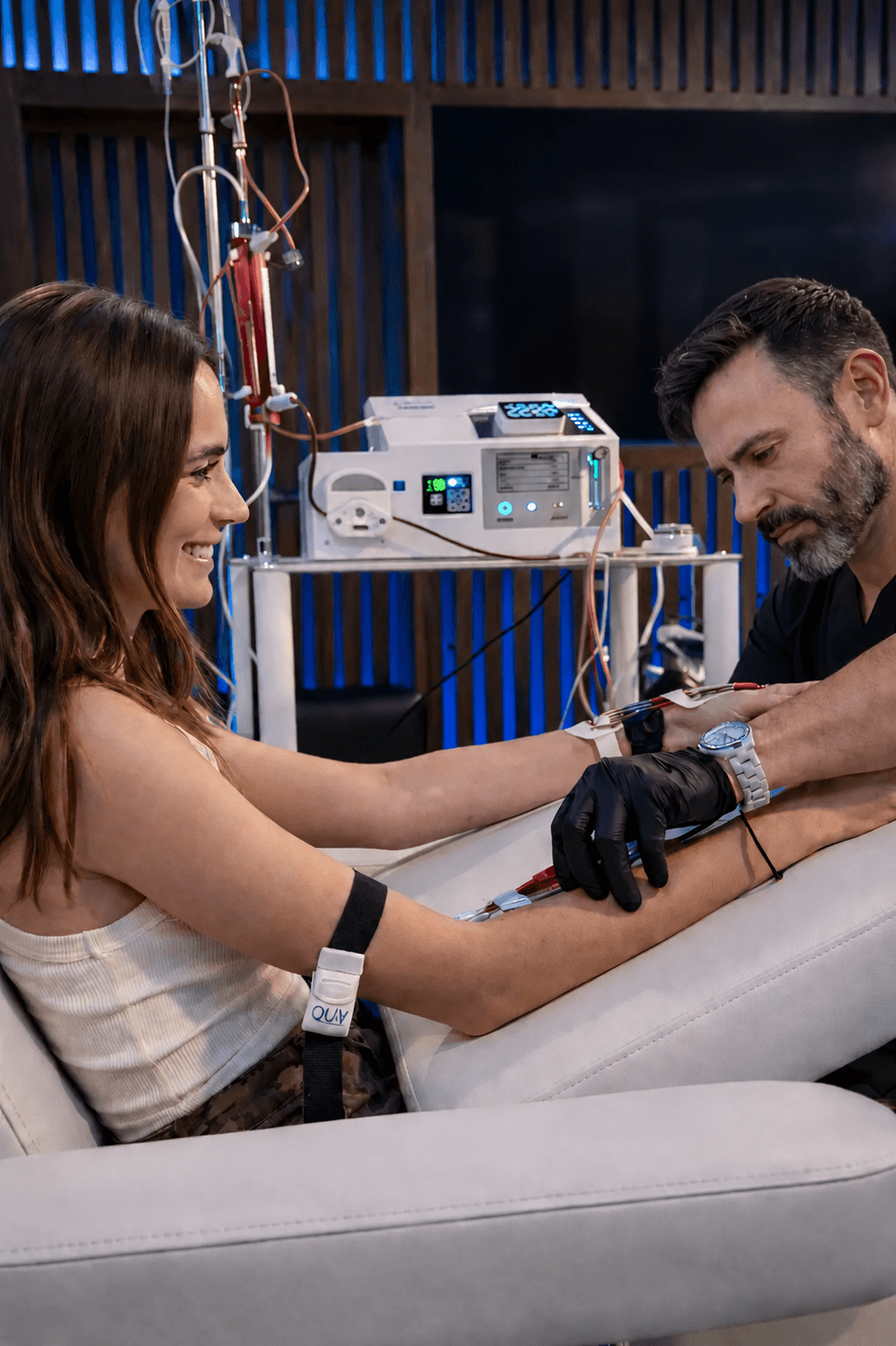
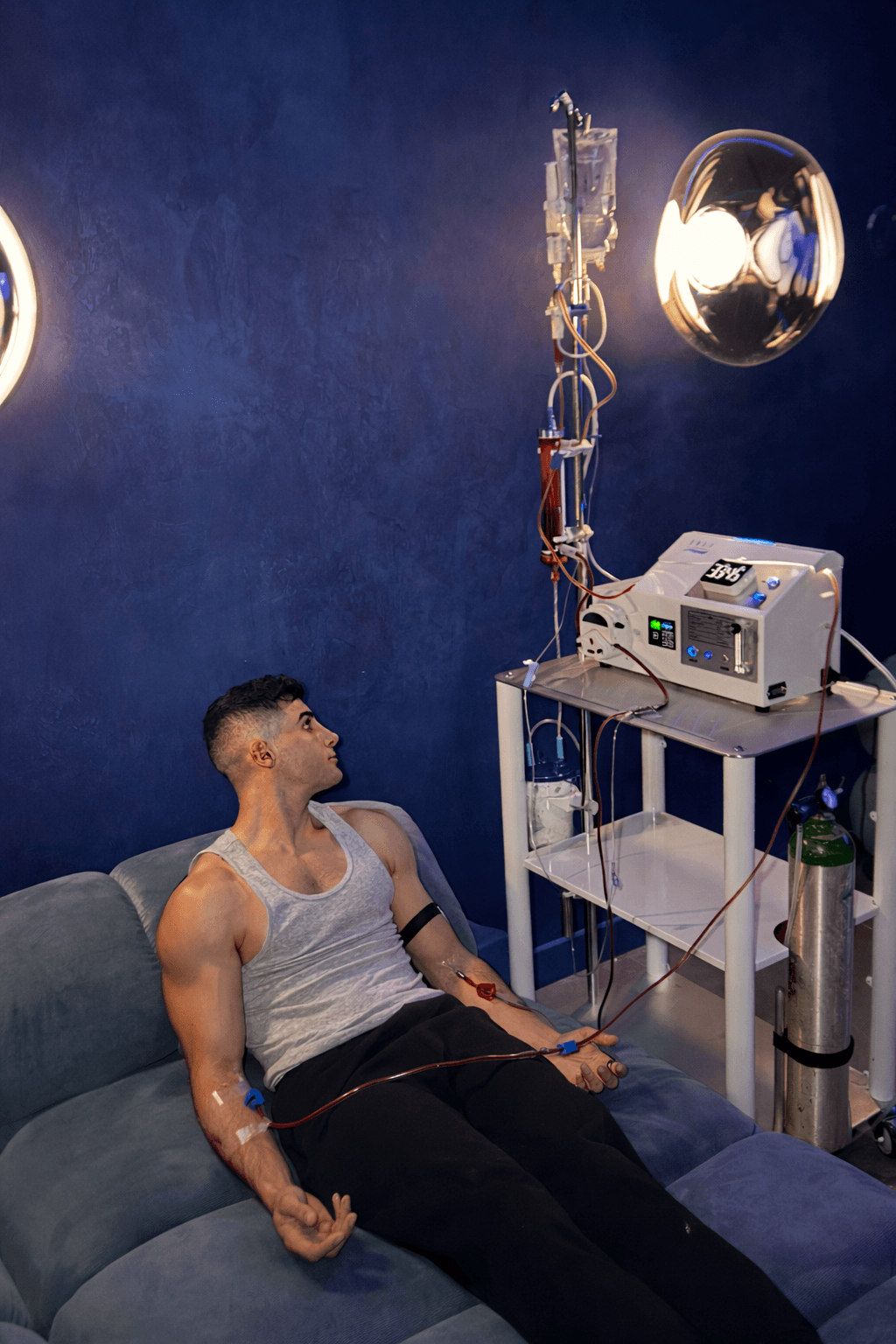
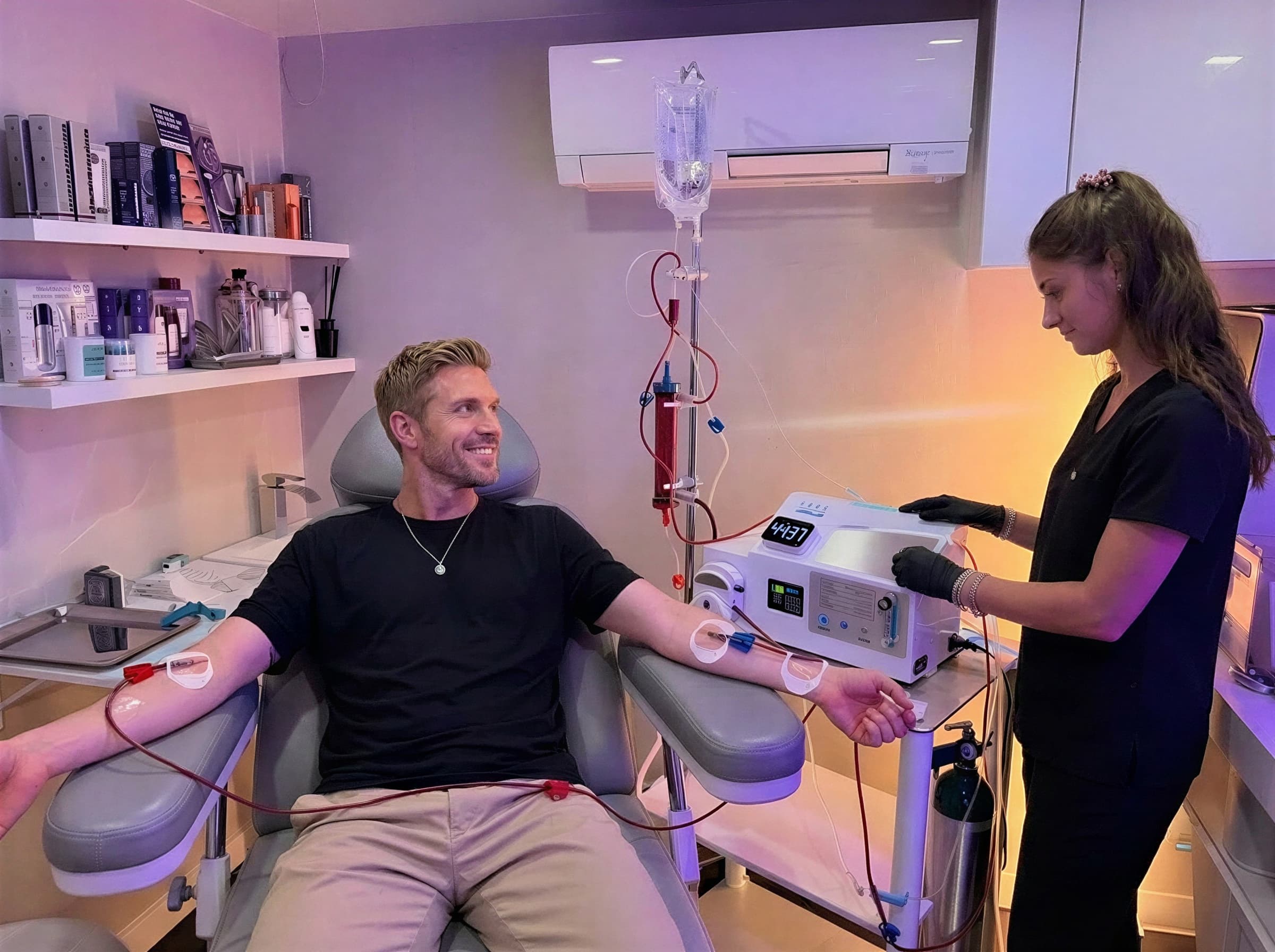
“We oxygenate, filter, and return two liters of your blood. Then we do it again.”
Candidacy for EBOO is determined through clinical consultation, not an online booking form. Every program is designed around the individual — their history, their tolerance, and their goals. That standard does not change regardless of session count or program duration.
Consultation-based. Candidacy determined through clinical review.
Frequently Asked Questions
EBOO (Extracorporeal Blood Oxygenation and Ozonation) is the most advanced blood-oxygenation and purification therapy available — a clinical procedure that filters, oxygenates, and ozonates your blood outside the body and returns it in real time. A portion of your blood is continuously drawn into a closed, medical-grade circuit, passed through fine filtration, saturated with oxygen and precisely calibrated medical ozone, then returned to circulation under continuous monitoring. At Forbidden Well in Union Square, NYC, EBOO is delivered as a structured, physician-supervised program for people serious about circulation, immune strength, recovery, and whole-body performance.
EBOO floods your bloodstream with oxygen and medical ozone while filtering it — a process clients pursue to boost energy, sharpen mental clarity, strengthen immune defense, improve circulation and oxygen delivery, speed up recovery, and lower the oxidative and inflammatory load the body carries. Because a single session conditions roughly 2 of your ~5 liters of blood, EBOO reaches a scale of whole-body blood conditioning that small-volume ozone treatments simply cannot. People use it for high-performance optimization, faster recovery, and feeling cleaner, lighter, and more energized. Individual results vary; EBOO is offered as a wellness and performance therapy, not a treatment for any specific disease.
EBOO is a far more powerful and comprehensive procedure than traditional ozone therapy. Standard ozone therapies expose only a small volume of blood or treat a localized area. EBOO continuously circulates a large volume of your blood — about two liters — through a closed medical system that oxygenates, ozonates, and filters it under real-time monitoring. The result is whole-body blood conditioning rather than the limited, single-pass exposure of conventional ozone techniques.
No — they are different procedures, and Forbidden Well offers EBOO, not UBI. UBI exposes a small volume of blood to ultraviolet light and returns it. EBOO circulates a far larger volume — about two liters — through a closed medical circuit that filters it and saturates it with oxygen and precisely calibrated medical ozone, under continuous monitoring. The two are sometimes paired at other clinics; at Forbidden Well, EBOO is delivered on its own as a structured, consultation-based program in Union Square, NYC.
EBOO filters and oxygenates your blood, which is a more mechanical process than the word "detox" suggests. Your blood is drawn into a closed circuit, passed through a medical-grade filter that captures particulate matter and debris, saturated with oxygen and medical ozone, and returned to circulation — roughly 2 of your ~5 liters over a single session. It does not replace the work of your liver and kidneys, which are the body's actual detoxification organs. EBOO conditions the blood itself, which is why clients tend to describe feeling lighter, clearer, and more energized rather than anything resembling a cleanse.
No. EBOO is not dialysis or a blood exchange — your own blood is conditioned and returned to you, with nothing replaced or swapped out. It shares only the mechanical idea of extracorporeal circulation with dialysis. Where dialysis replaces kidney function and corrects fluid balance, EBOO circulates your blood through a closed dual-line system to oxygenate, ozonate, and filter it. The goal is optimized blood quality, not fluid correction.
About 2 liters — roughly 40% of your total blood volume, since the average adult has about 5 liters. That large volume is exactly why EBOO can influence oxygenation, circulation, and metabolic clearance at a level small-volume ozone treatments can't reach. The active treatment runs about 50 minutes within a 90-minute appointment.
Most healthy adults are good candidates for EBOO. The one firm requirement is healthy venous access, because EBOO needs steady blood flow through two IV lines — people with very small, fragile, or hard-to-access veins may not be suitable. A clinical consultation reviews your health history, medications, immune status, and goals, and some conditions may need additional clearance before you begin.
EBOO at Forbidden Well is performed under continuous clinical supervision with multiple layers of safety. Every session is RN-administered under physician oversight and begins with an intake review, consent, vitals, and a pre-procedure evaluation. Throughout treatment, staff monitor your vital signs, blood glucose, oxygenation, and circulation in real time; the closed system carries built-in safety controls; and glucose support is kept on hand as a standard precaution. You are supervised from start to finish.
Most people experience no side effects beyond mild, short-lived ones. The most commonly reported are temporary lightheadedness, mild fatigue for a few hours afterward, chills during the session, and minor bruising or tenderness at the two IV sites — all of which typically settle on their own within a day. Because EBOO depends on steady venous access and precisely dosed ozone, every session at Forbidden Well is RN-administered under physician oversight, with vitals, blood glucose, and oxygenation monitored in real time. Your consultation reviews your health history and current medications to identify anything that would make EBOO unsuitable for you before you begin.
Most clients report noticeable changes in energy, clarity, and recovery within the first few sessions — and it is worth being straight about the evidence behind that. Ozone therapy has a substantial published literature covering its pharmacodynamics and clinical use, while EBOO specifically — the high-volume, filtered, extracorporeal form — has far fewer controlled trials behind it. What is well established is the mechanism: a large volume of circulating blood is filtered and saturated with oxygen and medical ozone under controlled conditions. What varies is the individual response. Forbidden Well offers EBOO as a wellness and performance therapy rather than a treatment for any specific disease, and a consultation is required before a first session.
A single EBOO session at Forbidden Well is $2,000, and the recommended four-session program is $6,000 — about $1,500 per session. EBOO is best delivered as a structured series, and a consultation at our Union Square location confirms the right protocol for you before you begin.
Plan for 90 minutes. The active blood-conditioning runs about 50 minutes, and the rest of the appointment is for venous assessment, dual-arm setup, preparation, and post-treatment monitoring — so the procedure is never rushed.
Start with a series of at least 4 sessions spaced about a week apart — this is where the real, compounding results show up. EBOO builds: each session deepens the circulatory and oxidative effects, and a structured series produces far stronger, more measurable changes in energy, recovery, and how you feel than any single treatment. After the initial series, many clients maintain results with a session every 4 to 8 weeks based on their goals.
Calm and uneventful for most people. Once the two IV lines are placed, you relax and recline while your blood circulates through the system — some notice a mild warmth or lightness, and many feel nothing at all. Because the process is slow and precisely controlled, it never feels like a rapid blood exchange, and your vitals are monitored the entire time.
EBOO (Extracorporeal Blood Oxygenation and Ozonation) is the most advanced blood-oxygenation and purification therapy available — a clinical procedure that filters, oxygenates, and ozonates your blood outside the body and returns it in real time. A portion of your blood is continuously drawn into a closed, medical-grade circuit, passed through fine filtration, saturated with oxygen and precisely calibrated medical ozone, then returned to circulation under continuous monitoring. At Forbidden Well in Union Square, NYC, EBOO is delivered as a structured, physician-supervised program for people serious about circulation, immune strength, recovery, and whole-body performance.
EBOO floods your bloodstream with oxygen and medical ozone while filtering it — a process clients pursue to boost energy, sharpen mental clarity, strengthen immune defense, improve circulation and oxygen delivery, speed up recovery, and lower the oxidative and inflammatory load the body carries. Because a single session conditions roughly 2 of your ~5 liters of blood, EBOO reaches a scale of whole-body blood conditioning that small-volume ozone treatments simply cannot. People use it for high-performance optimization, faster recovery, and feeling cleaner, lighter, and more energized. Individual results vary; EBOO is offered as a wellness and performance therapy, not a treatment for any specific disease.
EBOO is a far more powerful and comprehensive procedure than traditional ozone therapy. Standard ozone therapies expose only a small volume of blood or treat a localized area. EBOO continuously circulates a large volume of your blood — about two liters — through a closed medical system that oxygenates, ozonates, and filters it under real-time monitoring. The result is whole-body blood conditioning rather than the limited, single-pass exposure of conventional ozone techniques.
No — they are different procedures, and Forbidden Well offers EBOO, not UBI. UBI exposes a small volume of blood to ultraviolet light and returns it. EBOO circulates a far larger volume — about two liters — through a closed medical circuit that filters it and saturates it with oxygen and precisely calibrated medical ozone, under continuous monitoring. The two are sometimes paired at other clinics; at Forbidden Well, EBOO is delivered on its own as a structured, consultation-based program in Union Square, NYC.
EBOO filters and oxygenates your blood, which is a more mechanical process than the word "detox" suggests. Your blood is drawn into a closed circuit, passed through a medical-grade filter that captures particulate matter and debris, saturated with oxygen and medical ozone, and returned to circulation — roughly 2 of your ~5 liters over a single session. It does not replace the work of your liver and kidneys, which are the body's actual detoxification organs. EBOO conditions the blood itself, which is why clients tend to describe feeling lighter, clearer, and more energized rather than anything resembling a cleanse.
No. EBOO is not dialysis or a blood exchange — your own blood is conditioned and returned to you, with nothing replaced or swapped out. It shares only the mechanical idea of extracorporeal circulation with dialysis. Where dialysis replaces kidney function and corrects fluid balance, EBOO circulates your blood through a closed dual-line system to oxygenate, ozonate, and filter it. The goal is optimized blood quality, not fluid correction.
About 2 liters — roughly 40% of your total blood volume, since the average adult has about 5 liters. That large volume is exactly why EBOO can influence oxygenation, circulation, and metabolic clearance at a level small-volume ozone treatments can't reach. The active treatment runs about 50 minutes within a 90-minute appointment.
Most healthy adults are good candidates for EBOO. The one firm requirement is healthy venous access, because EBOO needs steady blood flow through two IV lines — people with very small, fragile, or hard-to-access veins may not be suitable. A clinical consultation reviews your health history, medications, immune status, and goals, and some conditions may need additional clearance before you begin.
EBOO at Forbidden Well is performed under continuous clinical supervision with multiple layers of safety. Every session is RN-administered under physician oversight and begins with an intake review, consent, vitals, and a pre-procedure evaluation. Throughout treatment, staff monitor your vital signs, blood glucose, oxygenation, and circulation in real time; the closed system carries built-in safety controls; and glucose support is kept on hand as a standard precaution. You are supervised from start to finish.
Most people experience no side effects beyond mild, short-lived ones. The most commonly reported are temporary lightheadedness, mild fatigue for a few hours afterward, chills during the session, and minor bruising or tenderness at the two IV sites — all of which typically settle on their own within a day. Because EBOO depends on steady venous access and precisely dosed ozone, every session at Forbidden Well is RN-administered under physician oversight, with vitals, blood glucose, and oxygenation monitored in real time. Your consultation reviews your health history and current medications to identify anything that would make EBOO unsuitable for you before you begin.
Most clients report noticeable changes in energy, clarity, and recovery within the first few sessions — and it is worth being straight about the evidence behind that. Ozone therapy has a substantial published literature covering its pharmacodynamics and clinical use, while EBOO specifically — the high-volume, filtered, extracorporeal form — has far fewer controlled trials behind it. What is well established is the mechanism: a large volume of circulating blood is filtered and saturated with oxygen and medical ozone under controlled conditions. What varies is the individual response. Forbidden Well offers EBOO as a wellness and performance therapy rather than a treatment for any specific disease, and a consultation is required before a first session.
A single EBOO session at Forbidden Well is $2,000, and the recommended four-session program is $6,000 — about $1,500 per session. EBOO is best delivered as a structured series, and a consultation at our Union Square location confirms the right protocol for you before you begin.
Plan for 90 minutes. The active blood-conditioning runs about 50 minutes, and the rest of the appointment is for venous assessment, dual-arm setup, preparation, and post-treatment monitoring — so the procedure is never rushed.
Start with a series of at least 4 sessions spaced about a week apart — this is where the real, compounding results show up. EBOO builds: each session deepens the circulatory and oxidative effects, and a structured series produces far stronger, more measurable changes in energy, recovery, and how you feel than any single treatment. After the initial series, many clients maintain results with a session every 4 to 8 weeks based on their goals.
Calm and uneventful for most people. Once the two IV lines are placed, you relax and recline while your blood circulates through the system — some notice a mild warmth or lightness, and many feel nothing at all. Because the process is slow and precisely controlled, it never feels like a rapid blood exchange, and your vitals are monitored the entire time.
What Our Patients Say
After one EBOO session, my breathing felt open, my head was clear, and my energy was steady in a way I haven’t felt in decades.
Sal S
Development & Construction
References
- Smith NL, et al. Ozone therapy: an overview of pharmacodynamics, current research, and clinical utility. Medical Gas Research, 2017.
- Bocci VA. Scientific and medical aspects of ozone therapy. State of the art. Archives of Medical Research, 2006.
References describe the underlying science and are provided for educational context. They are not a claim that this service diagnoses, treats, or cures any condition. Individual results vary.